
All Feeds Review – The Mastermind: Putin and the 9/11 Attacks
All Feeds Review – The Mastermind: Putin and the 9/11 Attacks
x.com1h
@mikenov: #CIA CIA #FBI FBI #Mossad Mossad Russian disinformation also points to their involvement. Nine Lies from Russia About 9/11
#CIA CIA #FBI FBI #Mossad MossadRussian disinformation also points to their involvement.Nine Lies from Russia About 9/11 voanews.com/a/fact-check-rus…
x.com1h
@mikenov: Nine Lies from Russia About 9/11
Nine Lies from Russia About 9/11 voanews.com/a/fact-check-rus…
x.com1h
@mikenov: The 9/11 Attacks were the Russian false flag operation.
The 9/11 Attacks were the Russian false flag operation. – Google Search google.com/search?num=10&new…

x.com1h
@mikenov: 9/11 — the day that changed the world
9/11 — the day that changed the world dw.com/en/9-11-the-day-that-…



theguardian.com1d
Obituary: Mohammed Atef
Michael_Novakhov shared this story from The Guardian. Mohammed Atef, who was killed, aged 57, in an United States air raid near Kabul was, according to US intelligence, the military planner of the Islamist al-Qaida group. US Intelligence also identified him as having masterminded the bombing of its embassies in Kenya and Tanzania in 1998. The US had placed a $5m reward on his head.The Pakistani journalist Hamid Mir – who recently met Osama bin Laden – said that he had met Atef in 1997. In that meeting, Atef told him of his role in organising “resistance” against the US presence in Somalia in 1992. This included the downing of a US helicopter in which 18 soldiers were killed.According to the Islamist lawyer Montasser Zayat, Atef was born in Menoufya – the birthplace of Egyptian presidents Mubarak and Sadat – in the Nile Delta, 50km north of Cairo, and he did two-years’ army national service. Interior ministry officials dismissed suggestions that Atef was a policeman, but he had no profile – and no police record – before he left Egypt in the mid-1980s to join the jihad – the holy war – against the Soviet Union in Afghanistan.He was not, said Zayat, among hundreds of militants arrested by Egyptian police following the assassination of President Sadat by members of the Egyptian Jihad group in 1981. The only conviction he got in Egypt was 18 years later, when he was tried in absentia among 107 defendants accused of membership of the Jihad group, led by al-Qaida’s deputy, Ayman Zawaheri, and sentenced to seven years imprisonment. This signalled that the Egyptian authorities knew little about his role until recently.Atef, according to the lawyer, got to know Zawaheri shortly after his arrival in Afghanistan. He was immediately sent to one of several military training camps financed by Bin Laden to fight the Russians, with the blessing of the US, Egypt and Saudi Arabia. Zayat says it was Zawaheri who introduced Atef to Bin Laden; he became one of the Saudi’s most trusted associates.He also developed a variety of names. Born Sobhi Abu Sitta, he was also Abu Hafs Al-Misri. Al Misri – the Arabic word for Egyptian – referred to his country of origin at a time when thousands of young mojahedeen from all over the Moslem world were flocking to join Bin Laden’s al-Qaida. Other names he used to shield his identity were El-Kabir (the big man), Taysir, Sheik Taysir Abdullah and Abu Khadijah.After al-Qaida’s first military commander, Ali al-Rashidi – more often known as Abu Obeida Al-Bansheeri – died when his boat capsized in Lake Victoria while on a recruiting mission, Atef inherited his post. Atef was also reportedly responsible for Bin Laden’s security. He personally searched journalists who wanted to meet the Saudi dissident after the US bombed Afghanistan in 1998.Atef, according to militants who encountered him while training in Afghanistan, was a very quiet man. In the first tape released by Bin Laden after the US bombing campaign against Afghanistan began on October 7, Zawaheri, Atef and the al-Qaida spokesman, the Kuwaiti, Suleiman Abu Geith sat next to each other. Only Atef made no speech blasting the US.Atef strengthened his relationship with Bin Laden by following in Prophet Mohamed’s tradition. He married his daughter to one of bin Laden’s many sons, and the two sat smiling and sipping tea during their videotaped wedding released by al-Qaida early this year. In the tape, Bin Laden claimed responsibility for the first time for the suicide attack against the destroyer USS Cole, in Yemen, which killed 17 sailors.Atef was a devout man whose hope, like all members of al-Qaida, had been to die as a martyr. The man expected to take Atef’s position is another Egyptian close to Zawaheri, Mohamed Mekawi, known as Seif El-Adl.· Mohammed Atef (Sobhi Abu Sitta) Islamist born 1944; died November 14-15 2001

x.com1d
@mikenov: Mohammed Atef | Afghanistan
Mohammed Atef | Afghanistan | The Guardian theguardian.com/news/2001/no…

x.com2d
@mikenov: #CIA CIA #FBI FBI #Mossad Mossad Mohammed Atef and his Russian Connections
#CIA CIA #FBI FBI #Mossad MossadMohammed Atef and his Russian Connections share.gemini.google/hRM2z1lF…
x.com2d
@mikenov: Mohammed Atef and Russian Connections
Mohammed Atef and Russian Connections share.gemini.google/hRM2z1lF…
x.com2d
@mikenov: Mohammed Atef
Mohammed Atef | Counter Extremism Project counterextremism.com/extremi…
x.com2d
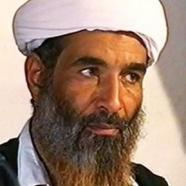
@mikenov: #CIA CIA #FBI FBI #Mossad Mossad Mohammed Atef of Al Qaeda and his Russian connections Mohammed Atef (also known as Abu Hafs al-Masri), al-Qaeda’s longtime military commander until his death in a U.S. airstrike in November 200
#CIA CIA #FBI FBI #Mossad MossadMohammed Atef of Al Qaeda and his Russian connections – Google Search google.com/search?q=Mohammed… Mohammed Atef (also known as Abu Hafs al-Masri), al-Qaeda’s longtime military commander until his death in a U.S. airstrike in November 2001, had no verified operational alliance or formal ties with the Russian government. Rather, his documented connections to Russia and the former Soviet Union were adversarial, involving direct military conflict, proxy support for anti-Russian insurgencies, and illicit attempts to acquire post-Soviet weaponry. [1]Key Points of IntersectionThe Soviet–Afghan War. Atef, a former Egyptian police officer and member of Egyptian Islamic Jihad, traveled to Afghanistan in the 1980s to fight against the Soviet military occupation. Operating alongside Abdullah Azzam and Osama bin Laden, Atef helped recruit, train, and organize Arab mujahideen fighters against Soviet forces, laying the groundwork for the founding of al-Qaeda in 1988. [1, 2]The Chechen Conflicts and the Hamburg Cell. As al-Qaeda’s military chief in the 1990s, Atef oversaw training camps in Afghanistan that hosted militants from across the globe, including fighters heading to or returning from the wars against Russian forces in Chechnya. Notably, the core members of the 9/11 “Hamburg cell”—including Mohamed Atta, Marwan al-Shehhi, and Ramzi bin al-Shibh—initially traveled to Afghanistan in late 1999 with the intention of fighting Russian troops in the Second Chechen War. Atef personally vetted them at the camps and redirected them from the Chechen front to carry out the September 11 attacks in the United States. [1, 2, 3, 4]Post-Soviet Weapons Procurement. Intelligence assessments and counterterrorism profiles—including research from the Combating Terrorism Center at West Point—note that Atef actively pushed for al-Qaeda to acquire weapons of mass destruction (WMDs) and advanced conventional arms. Throughout the 1990s, al-Qaeda leadership sought to exploit black-market networks emerging from the collapse of the Soviet Union to obtain radiological materials, chemical agents, and handheld surface-to-air missiles. [1, 2, 3]Confusion with Other Militants. Discussions of “Russian connections” occasionally stem from mistaken identity involving Atef’s nom de guerre, Abu Hafs al-Masri. Following Atef’s death in 2001, other militants used similar aliases—most notably Abu Hafs al-Urdani, a Jordanian commander who led foreign mujahideen fighters against Russian forces in Chechnya in the mid-2000s, and the Abu Hafs al-Masri Brigades, a shadowy group that issued propaganda claims for various international attacks. [1, 2, 3, 4]Context on Intelligence ClaimsFollowing Atef’s death, counterterrorism investigations revealed that several detainees—such as Ibn al-Shaykh al-Libi—fabricated stories about Atef’s foreign state connections (most famously claiming he sent emissaries to Saddam Hussein’s Iraq for chemical weapons training) to mislead interrogators. Similarly, unverified conspiracy theories alleging KGB or FSB ties to al-Qaeda’s senior leadership have been widely dismissed by mainstream intelligence analysts and historians. [1]

x.com2d
@Osint613: RT by @mikenov: BREAKING: Darchiev, Russia’s ambassador to the U.S., has died.
BREAKING: Darchiev, Russia’s ambassador to the U.S., has died.- Russian Foreign Ministry
x.com2d
@mikenov: Bin Laden denied role in 9/11 at first
Bin Laden denied role in 9/11 at first – Google Search google.com/search?q=Bin+Lade…

x.com2d
@mikenov: Mohammed Atef, Al Qaeda military chief
Mohammed Atef, Al Qaeda military chief – Google Search google.com/search?q=Mohammed…

thenewsandtimes.blog…2d
All Feeds Review – The Mastermind: Putin and the 9/11 Attacks
Articles, Blog, and TweetsAll Feeds Review – The Mastermind: Putin and the 9/11 Attacksthenewsandtimes.blog…22h9/11 HIJACKERS WERE PROFESSIONALLY TRAINEDArticles, Blog, and TweetsArticles, Blog, and Tweets47 min ago@mikenov: 9/11 HIJACKERS WERE PROFESSIONALLY TRAINED, e.g.: OPSEC, COMMUNICATIONS. By whom? Not by Bin Laden & Co. #CIA CIA #FBI FBI #Mossad Mossad Alternative counterintelligence analyses of the 9/11 Attacks – Google SearchArticles, Blog, and Tweets56 min ago@mikenov: Alternative counterintelligence analyses of the 9/11 Attacks – Google SearchArticles, Blog, and Tweets1 hrs ago@mikenov: #CIA CIA #FBI FBI #Mossad Mossad Al-Qaeda as an “Intelligent Counterintelligence Actor” The most prominent alternative analysis shifts the focus from viewing al-Qaeda as a group of irrational fanatics to analyzing them as a highly sophisticatedThe News And Times Information Network – Blogs By Michael Novakhov – thenewsandtimes.blogspot.comx.com23h@mikenov: 9/11 HIJACKERS WERE PROFESSIONALLY TRAINED, e.g.: OPSEC, COMMUNICATIONS. By whom? Not by Bin Laden & Co. #CIA CIA #FBI FBI #Mossad Mossad Alternative counterintelligence analyses of the 9/11 Attacksx.com23h@mikenov: Alternative counterintelligence analyses of the 9/11 Attacksx.com1d@mikenov: #CIA CIA #FBI FBI #Mossad Mossad Al-Qaeda as an “Intelligent Counterintelligence Actor” The most prominent alternative analysis shifts the focus from viewing al-Qaeda as a group of irrational fanatics to analyzing them as a highly sophisticatedx.com1d@mikenov: Alternative counterintelligence analyses of the 9/11 Attacks In the fields of intelligence studies, national security, and military history, “alternative counterintelligence analyses” of the 9/11 attacks refer to rigorous, unconvtandfonline.com1dThe 9/11 Attacks—A Study of Al Qaeda’s Use of Intelligence and CounterintelligenceMichael_Novakhov shared this story. Abstract The 9/11 attacks on New York and Washington, D.C. were undoubtedly the most brazen and shocking terrorist attacks conducted by a sub-state group in history. Al Qaeda’s capacity to achieve this outcome depended in large part on its meticulous intelligence and counterintelligence preparation…